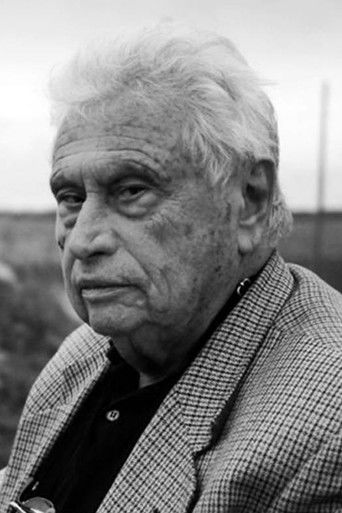
Luigi Di Gianni
Photoplayd Industry Rating
Not enough rated films yet to compute a weighted score.
Roles are weighted by involvement: director 1.0, screenwriter 0.7, lead 0.8, supporting 0.4, crew 0.1.
Luigi Di Gianni (born in Naples on October 20, 1926 and died in Rome on May 10, 2019) is an Italian screenwriter and director. Luigi Di Gianni believes in the power of cinema. It is this spirit, tragic and rogue, that has always possessed him. And that makes his films an experience difficult to forget in any hurry. It is an insinuating spirit, which ends up delighting and even tormenting the spectator, at first alien to her. It has multiform and unpredictable tentacles, which evade the safety of easy classification. Every time one tries to venture a definition, one has the suspicion of falling into reductionism, as if something is always missing. Starting with an inevitable question, however tedious it may seem: can we be content to speak, in his case, about documentary cinema? If asked, Di Gianni would certainly answer with a peremptory no, and for good reason. His is a decidedly authorial cinema. It is crossed by cultural and intellectual tensions that embrace literature, music, philosophy and great cinema. It is sustained by a sometimes unsatisfied desire to control rhythms, atmospheres, sounds, lights, movements… Above all, it is driven by the conviction that cinema is an expressive instrument that offers us a vision (turned black) of man and the world. And yet it is clear that few filmmakers have been able to document in such depth some of the most surprising, heartbreaking and disturbing aspects of our society, especially those rooted in the atavistic miseries of the South, as if tracing the deep folds of an Italian “anti-miracle.” Let’s take a guess. Di Gianni brings to light what elsewhere we tend to sweep under the carpet of rationality and respectability, but which, inexorably, is there underneath, applying pressure: his cinema is the documentation of social repression. Let’s follow with the thread of apparent contradictions. Di Gianni is an apolitical director, he does not believe in progress (he prefers the infinite labyrinth), he tends to be on the side of history. But, at the same time, one senses in his films a cry of rebellion, a love for the last; in short, an ethical and civil tension that is often lacking in those directors whose primary aim is to change the world. Once again: the characters in his films seem inexorably shrouded in cloaks of tragedy, and yet we are surprised, at certain moments, by the mockery of an unexpectedly grotesque twist. Armed with civic presumption, we are tempted to be indignant at manifestations that seem to plunge into the abysses of ignorance and backwardness, but at the same time, it is difficult to find filmmakers who place themselves before the world they choose to represent with more respect, avoiding the temptation to judge. And do we want to call his cinema “ethnographic”? Of course, he is one of its undisputed masters. It’s a pity that he is the first to strongly deny it, claiming instead that his films are about something else. It is not surprising that Di Gianni’s cinema is a magnificently isolated object, not only in Italy (this is unmistakably demonstrated by his only feature film, Il tempo dell’inizio, a kind of slow-motion nightmare, alien and elusive). Perhaps this is also one of the reasons for its charm, unalterable with the passage of time. The revival of his films seems to us, quite simply, necessary.
Known for

Credits
Essere capo (1967)
Director

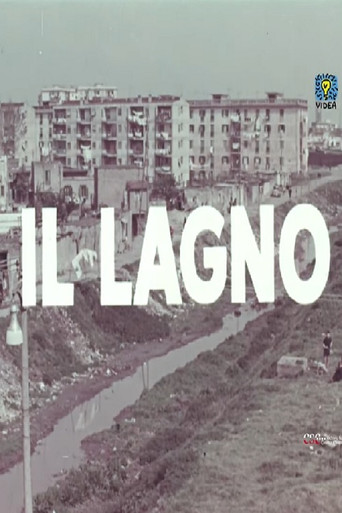
Il lagno (1966)
Director
Magia Lucana (1958)
Director
La frattura (1956)
Director
Il ricevimento (1968)
Director

L'Apparizione (1968)
Director
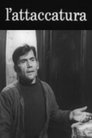
L'attaccatura (1971)
Director

L'Annunziata (1961)
Director
La possessione (1971)
Director

La tana (1967)
Director
La punidura (1959)
Director
Il sogno (1966)
Director
I fujenti (1966)
Director
Il cancelliere Krehler (1972)
Director
Incubo (1966)
Director
La ragazza di plastica (1968)
Director
Via Tasso (1960)
Director
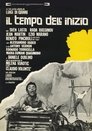
The Time of the Beginning (1974)
Director
Appunti per un film su Kafka - Nella colonia penale (2013)
Director

La Madonna di Pierno (1965)
Director
Chanukkà (Festa delle luci) (1968)
Director
Una malattia che si chiama Sud (1968)
Director
Basilicata, una regione tra due mari (1978)
Director
Carnevale a Ronciglione (1963)
Director
Landslide in Lucania (1960)
Director
Montevergine (1971)
Director

Il male di San Donato (1965)
Director
Il Messia (1965)
Director
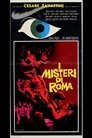
I misteri di Roma (1963)
Director
L' uomo e la maschera (1963)
Director
Lotta contro i mostri (1963)
Director
Le rocce di Belogradčick (1962)
Director
Tempo di raccolta (1966)
Director
Concerto de I Solisti di Roma, Concerti della Sera (1975)
Director
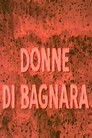
Donne di Bagnara (1959)
Director
Dal Foro Romano a Villa Medici (1958)
Director
Carlo Gesualdo. Notes for a film (2009)
Director
Monumenti d’Italia Ostia Antica (1955)
Director
Nascita di un culto (1968)
Director
Morte di Padre Pio (1971)
Director
Grazia e morte (1971)
Director
Un medico di campagna (2012)
Director
La Madonna del Pollino (1971)
Director
Il culto delle pietre (1967)
Director
Ragazze dell’avanspettacolo (1961)
Director
La Madonna in cielo, la "matre" in terra (2006)
Director
Ailano, la tradizione (2005)
Director

Grazia e numeri (1961)
Director
L'arresto (1954)
Director

Viaggio in Lucania (1965)
Director
Il monastero di Rila (1962)
Director
Un paese che frana (1964)
Director
Lucania Persa - Ritorno a San Cataldo (2014)
Director

Dottori aeropittore futurista (1971)
Director
Antiche città bulgare (1962)
Director
Atto senza parole (1969)
Director
Concerto in miniatura (1966)
Director
Vajont (Natale 1963) (1964)
Director
The Power of the Spirits (1968)
Director
Pericolo a Valsinni (1959)
Director
L' ultima faccia di Medusa (1958)
Director
Il gallo canta a mezzanotte (1958)
Director
Il Cinegiornale della pace (1963)
Director
Nascita e morte nel meridione (S. Cataldo) (1959)
Director
La Milano di Achille Bertarelli (1987)
Director